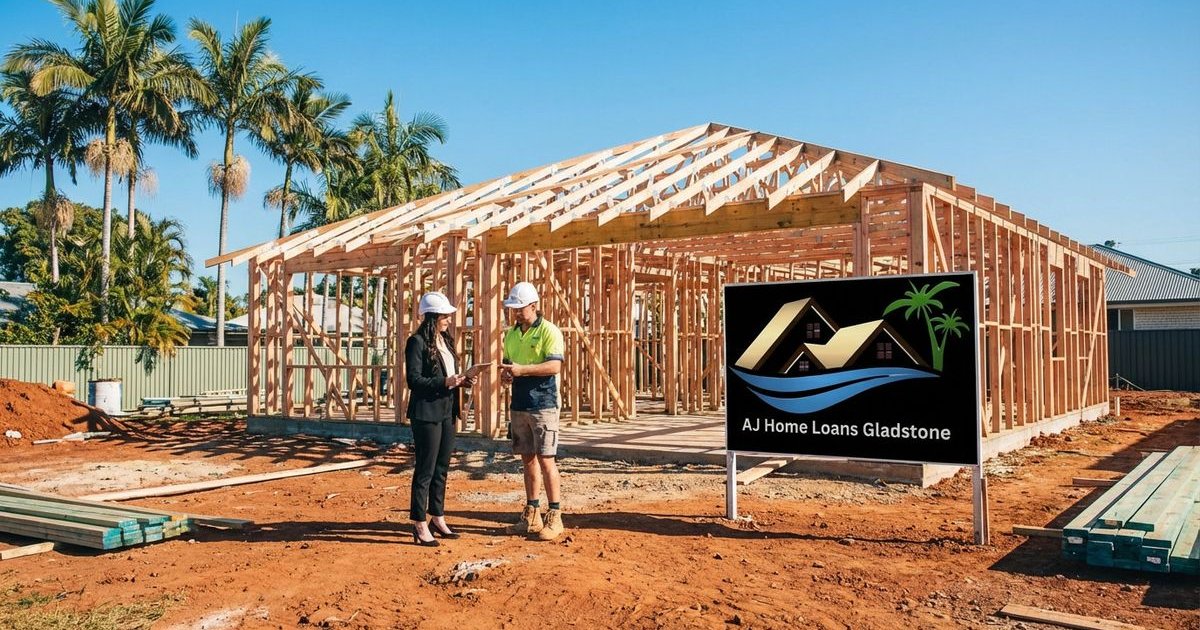
How Construction Loans Work
Construction loans operate differently from standard home mortgages because the funds aren’t handed over in one go. Instead, the bank releases money in “progressive drawdowns” to match the specific stages of your build.
This structure protects you from paying interest on the full loan amount before the house is even built. You only pay interest on the money that has actually been paid out to your builder. From our experience, this cash flow benefit is the biggest advantage of a construction loan, often saving homeowners thousands during the 6-12 month build phase.
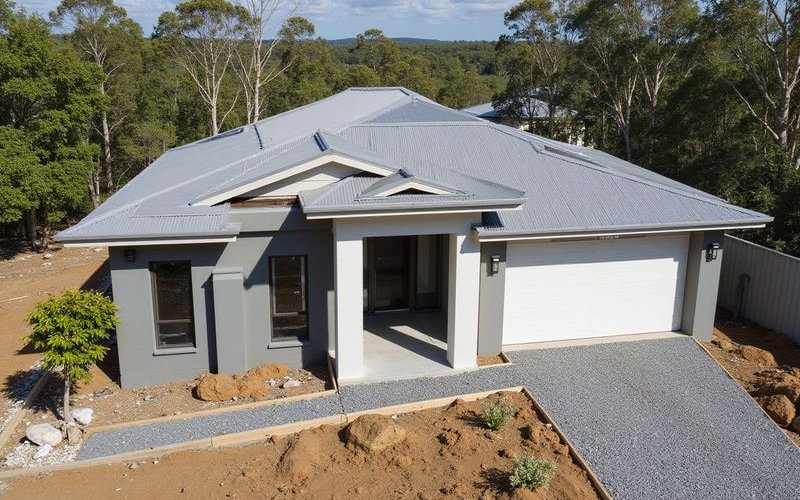
Types of Construction Finance
Choosing the right loan product depends entirely on your current situation and ownership status.
Construction Loan (Land + Build)
This is the most common option for new homeowners. You bundle the land purchase and the construction costs into a single application.
- How it works: You settle on the land first (ownership transfers to you), and then the construction loan kicks in for the build.
- Key benefit: You only have one set of closing costs and one application process.
Construction-Only Loan
If you already own your block of land—perhaps you bought it years ago or inherited it—this is the specific product you need.
- The specific use case: The loan covers only the building contract.
- Equity release: We often see clients use the equity in their existing land as the deposit for the construction loan, reducing the cash they need upfront.
House and Land Packages
These are popular in new estates but can be tricky to finance if the contracts aren’t structured correctly.
- Two contracts vs. one: Most packages actually involve two separate contracts: one for the land developer and one for the builder.
- The trap: Banks treat these as two separate transactions, so timing the land settlement to match the builder’s start date is critical to avoid holding costs.
Comparison of Construction Finance Options
| Feature | Land + Build Loan | Construction-Only Loan | House & Land Package |
|---|---|---|---|
| Primary Use | Buying land & building immediately | Land already owned | Buying in a new estate |
| Contracts | Two (Sale + Build) | One (Build only) | Two (Developer + Builder) |
| Deposit | Paid on both land & build | Cash or Land Equity | Paid on both components |
| Stamp Duty | Payable on land value only | N/A (paid when land bought) | Payable on land value only |
Understanding Progress Payments
Standard Progress Payment Stages
In Queensland, most residential builds follow the HIA (Housing Industry Association) or Master Builders standard schedule. While the exact percentages can vary slightly by builder, this is the industry standard you should expect in 2026:
| Stage | What’s Complete | Typical % |
|---|---|---|
| Deposit | Contract signing & insurance | 5% |
| Base/Slab | Foundation poured & plumbing | 15% |
| Frame | Structural frame & trusses up | 20% |
| Enclosed | Roof, windows, brickwork | 25% |
| Fixing | Internal linings, cabinetry, doors | 20% |
| Completion | Painting, appliances, cleaning | 15% |
Your builder will send an invoice at the end of each stage. We then forward this to the bank, which may send a valuer to the site to confirm the work is completed to standard before releasing funds.
How Interest Works During Construction
You generally pay “interest-only” on the funds that have been drawn down, not the full loan limit. This ramps up slowly as the build progresses.
Example: $400,000 Construction Build (Assuming 6.00% Interest)
- Month 1 (Deposit 5%): You owe $20,000. Interest is approx $100/month.
- Month 3 (Frame 40%): You owe $160,000. Interest is approx $800/month.
- Month 6 (Fixing 85%): You owe $340,000. Interest is approx $1,700/month.
- Completion (100%): You owe $400,000. Loan converts to full Principal & Interest repayments.
This graduated payment structure is designed to help you manage your cash flow while you may still be paying rent or a mortgage on your current home.

What Lenders Require
Banks are far stricter with construction loans than standard mortgages because the security (the house) doesn’t exist yet. They need assurance that the build is viable and the builder is reputable.
Fixed Price Building Contract
Lenders almost universally demand a fixed-price contract. “Cost-plus” contracts (where costs are estimated and you pay the actual bills plus a margin) are rarely accepted for residential lending because the final price is too uncertain.
- Must include: A signed HIA or Master Builders contract with a specific completion date and a progressive payment schedule.
Builder Requirements
Your builder must be fully vetted.
- Licence check: They must hold a valid QBCC (Queensland Building and Construction Commission) licence.
- Insurance: They must provide a certificate of “Home Warranty Insurance” (QC1 or similar) before the bank releases the first payment.
Land Documentation
- Title search: Proves your ownership or right to buy.
- Registered Plan: Confirms the exact dimensions and location of the block.
Construction Documentation
- Council Approved Plans: Stamped and approved by the local council or private certifier.
- Energy Rating: As of the NCC 2022 updates, new homes in Queensland must meet a 7-star energy efficiency rating. Lenders now check for this certificate to ensure the asset meets current codes.
- Soil Test & Foundation Design: Critical for valuation.
Owner-Builder Considerations
Managing the build yourself is becoming less common due to the financing difficulty.
Owner-Builder Restrictions
Banks view owner-builder projects as high risk.
- LVR Limits: Most lenders cap borrowing at 60% LVR (Loan to Value Ratio). This means you need a massive 40% deposit or equity contribution.
- Cost verification: You will likely need to provide a quantity surveyor report to validate your budget.
- Interest Rates: Expect to pay a premium of around 1.00% - 2.00% above standard construction rates.
Why Lenders Are Cautious
The primary risk is the lack of a fixed-price contract. If you run out of money halfway through, the bank is left with a half-finished house that is hard to sell.
- Our advice: Unless you are a licenced tradesperson with significant cash reserves, we usually recommend using a registered builder for the main structure to secure better finance terms.
The Construction Loan Process
Step 1: Pre-Approval
Before you sign a building contract, speak to a broker. You need to know your “total project budget” cap.
- Action: Our construction finance service provides “Construction Pre-Approval” specifically, which checks your eligibility for the progressive drawdown structure.
Step 2: Finding Your Builder & Reviewing Costs
- Comparison: Get at least three quotes.
- Check the Licence: Use the QBCC Licence Search to check for any history of defective work or disputes.
- Inclusions: Ensure the quote includes site costs (earthworks). This is the #1 area where budget blowouts happen.
Step 3: Contract Review
Your solicitor should review the contract before you sign.
- Look for: “Prime Cost” (PC) items. These are allowances for things like tiles or taps where the final price isn’t fixed. Keep these to a minimum to avoid surprise costs later.
Step 4: Formal Approval
We submit your signed contract, plans, and specifications to the lender.
- Valuation: The bank’s valuer estimates the “On-Completion Value.” If this comes in lower than your total cost (Land + Build), you may need to top up your deposit.
Step 5: Settlement (Land)
If you are buying land, this loan settles first.
- Ownership: You now own the dirt and can legally let the builder on site.
Step 6: Construction Phase
The build begins.
- Process: You authorize each payment. Never sign a blank payment claim form for your builder. Always inspect the work (e.g., check the slab is poured) before signing the invoice.
- Timeline: typically 6 to 12 months depending on weather and material availability.
Step 7: Completion
- Handover: You conduct a final inspection.
- Documents: The bank requires the “Certificate of Occupancy” (Form 21) and proof of building insurance before releasing the final payment.
- Loan Conversion: Your loan switches from “interest-only” to standard Principal & Interest repayments.
Common Construction Loan Challenges
Variations and Cost Overruns
A “variation” is any change to the agreed contract, like adding extra power points or changing the benchtop stone.
- The risk: Lenders often refuse to fund variations after the loan is approved. You usually have to pay for these changes 100% out of your own pocket.
Construction Delays
Queensland weather is unpredictable.
- Impact: Delays extend your “interest-only” period. If you are renting simultaneously, this burns through your cash reserves.
Builder Insolvency
While rare, builders do go bust.
- Protection: This is why the QBCC Home Warranty Insurance is non-negotiable. It protects you if the builder cannot complete the work.
Valuation Issues (“Shortfall”)
Sometimes a valuer will say a house costing $600,000 to build will only be worth $580,000 when finished.
- The fix: You must cover this $20,000 “shortfall” with cash. We help you mitigate this by choosing lenders who understand local construction values.
Tips for Successful Construction Finance
1. Plan Your Budget with a Buffer
Do not borrow to your absolute maximum.
- The 10% Rule: Keep 10% of your build cost in a separate savings account for “finishing costs” like landscaping, fencing, driveways, and window coverings, which are often excluded from the main contract.
2. Choose Your Builder Wisely
Price is not the only factor.
- Due diligence: Ask to see a current job site. A messy, chaotic site is often a sign of a disorganized business.
3. Understand Your Contract
- Fixed vs. Estimates: Ensure site costs are fixed. If your block has “reactive soil” (common in Gladstone), foundation costs can skyrocket if they aren’t locked in.
4. Allow for Rent
You’ll need somewhere to live during construction.
- Calculation: Budget for 12 months of rent, even if the builder says 8 months. Rain delays are inevitable.
5. Keep Contingency
Things will cost more than expected.
- Discipline: Avoid making changes once the contract is signed. Administrative fees for variations can cost $500+ before the actual work is even priced.
Gladstone Construction Considerations
Building in the Gladstone region presents specific opportunities and technical challenges that out-of-town lenders might miss.
Local Builders & Soil Types
The Gladstone region often features reactive clay soils (Type M, H, or E).
- The impact: These soils expand when wet and shrink when dry. This requires specific “waffle pod” or stiffened raft slabs compliant with AS 2870.
- Our role: We ensure your construction loan valuation accounts for these higher site costs so you aren’t hit with a surprise bill for extra concrete.
Rental Market Pressure
As of 2026, Gladstone’s vacancy rate is extremely tight (hovering between 1.7% and 2.2%).
- For investors: This “landlord’s market” means high demand for new, modern family homes.
- For owner-occupiers: It highlights the urgency of getting your build finished on time so you can stop paying high market rent.
Regional Property Values
Lenders can be conservative with regional valuations.
- Local knowledge: We work with lenders who understand the local industry (ports, heavy industry) and don’t penalize applications just because the postcode isn’t in a capital city.
First Home Buyers Building New
The Queensland government continues to incentivize new builds heavily.
Advantages:
- First Home Owner Grant: Currently $30,000 for eligible transactions signed between 20 November 2023 and 30 June 2026. This is a massive boost to your deposit.
- Stamp Duty Concessions: You generally only pay stamp duty on the land value, not the house construction cost. On a $500,000 total package, this can save you over $10,000 compared to buying an established house.
Challenges:
- Complexity: You are managing a land contract, a build contract, and a grant application simultaneously.
- Cash flow: You need to pay the first few bills (soil tests, deposit) before the grant money typically arrives.
How We Help with Construction Loans
At AJ Home Loans, we specialize in guiding you through this multi-stage journey.
- Assess your full budget: We use tools like the Cordell Sum Sure calculator to cross-check that your insurance and budget estimates are realistic.
- Find appropriate lenders: We identify banks that favor construction and offer competitive progress payment policies.
- Coordinate the process: We talk directly to your builder’s admin team to handle the invoices so you don’t have to chase them.
- Monitor progress claims: We ensure the bank releases funds on time to keep your build moving.
- Support you through variations: If plans change, we help structure the finance to cope.
- Convert your loan: Once the keys are in your hand, we organize the switch to a standard, lower-rate mortgage.
Construction finance requires more hands-on management than a standard purchase. We are with you throughout the process to ensure the money flows when it needs to.
Planning to Build?
Whether you’ve found your perfect block in Gladstone, chosen your builder, or are just starting to look at display homes, you need to know your numbers first.
Book a free consultation to discuss your building plans. We’ll help you clarify your budget, calculate your borrowing power, and map out a stress-free path to your new front door.
Tags
Coral Jacobs
Senior Mortgage Broker at AJ Home Loans Gladstone
Related Articles

Budgeting Tips for First Home Buyers: Building Your Deposit Faster
Practical budgeting strategies to help first home buyers save for a deposit faster while managing everyday expenses.
Buying Property at Auction: A Queensland Buyer's Guide
Complete guide to buying property at auction in Queensland. Understand the process, prepare properly, and avoid costly mistakes.

Should You Get a Car Loan Through a Mortgage Broker?
Discover why mortgage brokers offer car loans, the benefits of using a broker for vehicle finance, and how it compares to dealer finance.