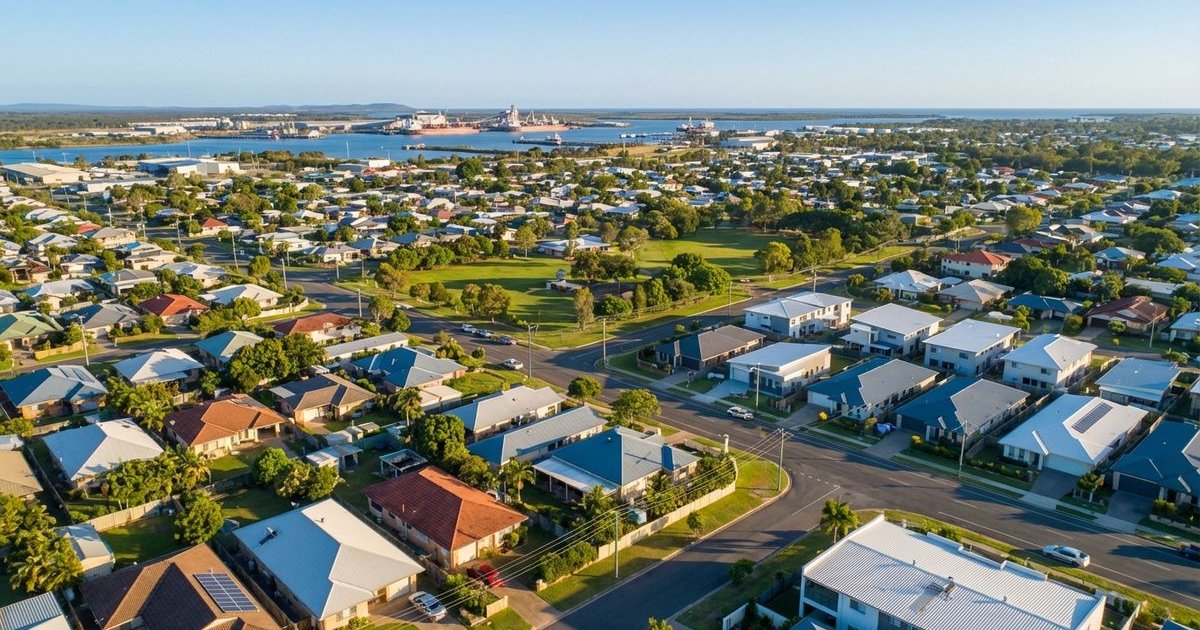
Investing in Gladstone Property: A Complete Guide for 2026
If you mention “investing in Gladstone” to a room of seasoned property buyers, you will almost certainly hear a warning about the 2012 boom and bust. We understand that hesitation because we remember it too. But from where we stand in 2026, the data tells a completely different story—one of sustainable industrial growth rather than a manic construction bubble.
The difference this time isn’t just about yields, though they remain some of the highest in Queensland. The real shift is in infrastructure permanence. With the Fitzroy to Gladstone Pipeline finally securing the region’s water supply this year and the Stanwell CQ-H2 project moving into its primary construction phase, the local economy is no longer reliant on a single fleeting project.
This guide looks at the Gladstone market as it stands right now—not the hype of a decade ago. We’re going to break down the specific suburbs delivering returns, the “green energy” projects that are actually funded (versus the ones that were cancelled), and the exact numbers you need to run to make a smart decision.
Why Investors Are Returning to Gladstone
The Yield Advantage
While Brisbane and the Gold Coast have seen yields compress significantly, Gladstone continues to be a cash flow engine for our clients.
- Gross yields: We are currently seeing 5.5%-7.2% depending on the asset class.
- Compare to Brisbane: Typically sitting at 3.0%-4.0%.
- Compare to Sunshine Coast: Often below 3.5%.
For investors facing higher interest rates, these numbers are the difference between a property that pays for itself and one that drains your monthly cash flow.
Water Security: The 2026 Game Changer
Most out-of-town investors overlook this, but the completion of the Fitzroy to Gladstone Pipeline is arguably the most critical de-risking event for the region this decade. By connecting the Fitzroy River to Gladstone’s water network, the region has effectively “drought-proofed” its heavy industry. This long-term water security gives major industrial players the confidence to sign 20-year operational contracts, which in turn secures long-term rental demand for your property.
Diverse Employment Base
The narrative has shifted from “LNG or bust” to a broader industrial mix.
- Renewable Hydrogen: The Stanwell CQ-H2 project is the anchor here, with construction workforce numbers peaking between 2026 and 2030.
- Port of Gladstone: Remains one of Australia’s busiest multi-commodity ports.
- Bio-Refining: New investments in the Yarwun precinct are diversifying the local job market beyond traditional fossil fuels.
- Retail & Hospitality: A stabilised population has supported a recovery in the local service sector.

“Green Energy” Projects: What’s Real and What’s Not
One of the biggest pitfalls we see is investors buying based on old news. You must distinguish between announced projects and committed capital.
| Project Name | Status (2026) | Investor Impact |
|---|---|---|
| Stanwell CQ-H2 | Active Construction | High. Driving immediate rental demand for workers. |
| Fitzroy-Gladstone Pipeline | Completion/Operational | High. Long-term security for industrial tenants. |
| Fortescue PEM50 | Cancelled/Archived | Warning. Do not buy based on this previously hyped project. |
| Rio Tinto Yarwun Hydrogen | Pilot Operational | Moderate. Stabilises existing workforce rather than expanding it. |
Insider Tip: Be wary of sales agents still promoting the “Fortescue Hydrogen Hub” as a primary growth driver. Since that project was archived in mid-2025, smart money has shifted focus to suburbs servicing the Stanwell and Yarwun precincts.
Gladstone Suburb Investment Profiles
South Gladstone
Investment Profile:
- Median house price: ~$480,000-$510,000
- Weekly rent: ~$500-$540
- Gross yield: ~5.2% (Houses) / ~5.8% (Units)
- Vacancy rates: Tight (~1.5%)
Why invest here: This is the workhorse of the Gladstone market. It offers proximity to the CBD without the price tag of the harbour views. Tenants here value the convenience of the Gladstone Centre Plaza (NightOwl Centre) for their daily shopping. We find that older high-set homes here often have “good bones” and potential for cosmetic renovation to boost equity.
Clinton
Investment Profile:
- Median house price: ~$460,000-$500,000
- Weekly rent: ~$480-$530
- Gross yield: ~5.4%
- Vacancy rates: Low
Why invest here: Clinton is the family favourite. With the Clinton State School and proximity to the Bunnings/Harvey Road commercial strip, it attracts long-term family tenants who want stability. Properties here are often newer, low-set brick homes that require less ongoing maintenance than the timber queenslanders found in older suburbs.
Gladstone Central
Investment Profile:
- Median unit price: ~$320,000-$360,000
- Weekly rent: ~$420-$480
- Gross yield: ~6.8%-7.2%
- Tenant profile: Young professionals, contract workers
Why invest here: If you want pure yield, Central units are the play. Demand is driven by workers who want to walk to the lifestyle precincts—locals love Auckland House for a waterfront drink or LightBox for coffee. Just be careful with body corporate fees, as they can eat into that attractive gross yield.
Tannum Sands / Boyne Island
Investment Profile:
- Median house price: ~$600,000+
- Weekly rent: ~$580-$650
- Gross yield: ~4.8%-5.2%
- Tenant profile: Managers, families, lifestyle seekers
Why invest here: This is the “blue chip” belt. Tenants pay a premium to be near the Millennium Esplanade and the beach. While the yield is lower, the capital growth potential is generally higher due to the scarcity of land. Locals here swear by the coffee at The Junction Cafe—amenities like this keep tenant retention high.
Understanding the Market Cycle
Gladstone has matured from a volatile boom-town into a steady industrial city, but you must understand the current phase.
2010-2014 (The Boom): Driven by $60bn in LNG construction. Rents hit $800/week, then crashed. 2015-2019 (The Correction): Prices dropped 40-50%. A painful lesson in oversupply. 2020-2025 (Recovery): Vacancy rates tightened below 2%, and prices recovered to fair value. 2026 Onwards (Stability): We are now in a “Yield + CPI Growth” phase.
Key takeaway: Do not invest here expecting property prices to double in three years. Invest here because you want a self-funding asset that puts cash in your pocket every month while slowly ticking up in value.
Investment Loan Considerations
Interest-Only vs Principal & Interest
For our clients buying in regional markets, cash flow management is critical. Here is how the numbers stack up in the current 6.5% interest rate environment.
| Scenario | Loan Amount | Rate | Monthly Repayment | Est. Rent (Net) | Pre-Tax Cash Flow |
|---|---|---|---|---|---|
| Interest Only | $400,000 | 6.50% | ~$2,167 | ~$1,900 | -$267 / month |
| Principal & Interest | $400,000 | 6.50% | ~$2,528 | ~$1,900 | -$628 / month |
Choosing an interest-only term can improve your monthly position by over $350. This “buffer” is essential for regional investing, where you may face unexpected repairs or slightly longer vacancy periods between tenants.
Loan Structuring
We always recommend keeping your investment loan completely portable and separate from your home mortgage. This structure, which our investment property finance service can help you set up, protects your family home from any risks associated with the investment and simplifies your tax reporting at the end of the financial year.

Property Management & Insurance Risks
The “North Queensland” Insurance Trap
This is a specific detail that catches many investors off guard. Insurance underwriters often draw a line at the Tropic of Capricorn (Rockhampton), placing Gladstone on the border of the “cyclone zone.”
- The Cost: Expect to pay $2,200-$2,800 per year for landlord insurance in suburbs like South Gladstone.
- The Comparison: A similar house in Brisbane might only cost $1,200 to insure.
- The Action: Always get an insurance quote before your cooling-off period ends. Do not assume standard QLD rates apply.
Tenant Quality
Gladstone tenants are generally reliable, but the demographic is specific.
- Shift Workers: Many tenants work 12-hour shifts at the refineries. They require block-out blinds and air conditioning in bedrooms. Installing these can be the difference between securing a tenant in 24 hours vs. 2 weeks.
- Pets: Since many tenants are families or long-term contractors, allowing pets can increase your rental pool by up to 40%.
Is Gladstone Right for Your Portfolio?
Gladstone suits you if:
- You need to boost the overall yield of your portfolio to assist with borrowing capacity.
- You have a budget under $550,000 but still want a freestanding house.
- You are comfortable with a “buy and hold” strategy focused on income.
Gladstone may not suit you if:
- You panic at the thought of a 3-week vacancy period.
- You are looking for aggressive, short-term capital flipping.
- You neglect to budget for higher insurance premiums and council rates.
Getting Started with Gladstone Investment
If the numbers make sense for your strategy, the next steps are practical:
- Verify Your Borrowing Power: Ensure your pre-approval accounts for regional lending policies (some lenders have postcode restrictions on high-density units).
- Check the “Project List”: Confirm the major projects near your target suburb are actually approved and funded.
- Audit the Insurance: Get a quote from a specialist insurer familiar with Central Queensland.
- Local Expertise: Engage a property manager who knows the difference between a “Clinton brick home” and a “West Gladstone timber reno.”
We can help with the finance side—from assessing your borrowing capacity to structuring loans that keep your personal assets safe. Book a consultation to discuss your investment goals.
Tags
Coral Jacobs
Senior Mortgage Broker at AJ Home Loans Gladstone